Cinnamon Bark
The inner bark of an evergreen tree, dried into the curled quills most kitchens know as a warming spice.
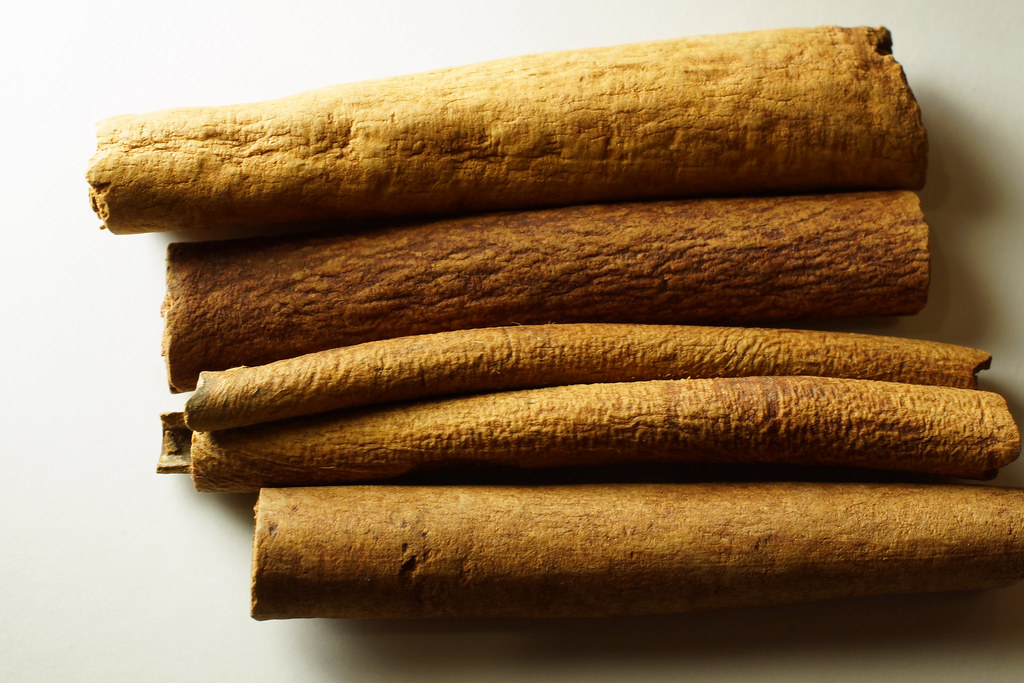
The tree and its bark
Cinnamon comes from several related trees in the genus Cinnamomum, members of the laurel family that grow as evergreens across South and Southeast Asia. The part that becomes the spice is not the fruit or the leaf but the inner bark, peeled from young branches and left to dry. As it dries it curls inward on itself, forming the familiar quill or stick.
Most of the world's cinnamon has historically come from Sri Lanka, southern India, and the coastal forests of the region, where the trees are coppiced and the bark is harvested by hand. The work is slow and skilled, which is one reason cinnamon was treated as a luxury good for much of recorded history.
A spice with a long trade history
Few ingredients have travelled as far or as long as cinnamon. It moved along the spice routes of the ancient world, was recorded in early Egyptian and Mediterranean texts, and was prized in medieval Europe as both a flavour and a marker of wealth. Its scent comes largely from aromatic compounds in the bark, which is why a single stick can perfume a whole pot.
In the kitchen, cinnamon bark sits comfortably in both sweet and savoury cooking. It appears in baked goods, mulled drinks, and breakfast dishes across the West, and in spice blends, rice dishes, and slow-cooked stews across the Middle East, North Africa, and South Asia. It has also long been present in many herbal and culinary traditions where warming spices are valued.
Cinnamon bark in Veris
Veris uses 70 mg of cinnamon bark per serving, the largest single amount among the six actives in the formula. It leads the label both by weight and by familiarity, since it is the ingredient most people will already recognise from their own cupboard.
We list the amount plainly on the supplement facts panel rather than tucking it inside a blend. That way the cinnamon contribution is visible alongside every other active, and you can see exactly how the 70 mg fits into the two-capsule daily serving.
How it sits in the formula
Cinnamon bark anchors the botanical side of Veris. It is the most kitchen-familiar of the actives, a recognisable starting point for a formula that then moves into less everyday ingredients such as juniper and bitter melon.
It is often discussed in the broader context of metabolic wellness and is a long-standing part of many herbal traditions, which is the company it keeps in this formula. We make no promises about what it does in the body. We simply place a measured, disclosed amount of a well-known spice into the blend.
Cinnamon is not the fruit or the leaf but the inner bark, peeled and left to curl as it dries.
This article is general wellness information and is not medical advice. Veris is a food supplement and does not replace a varied diet. Talk to your doctor about your individual needs.